
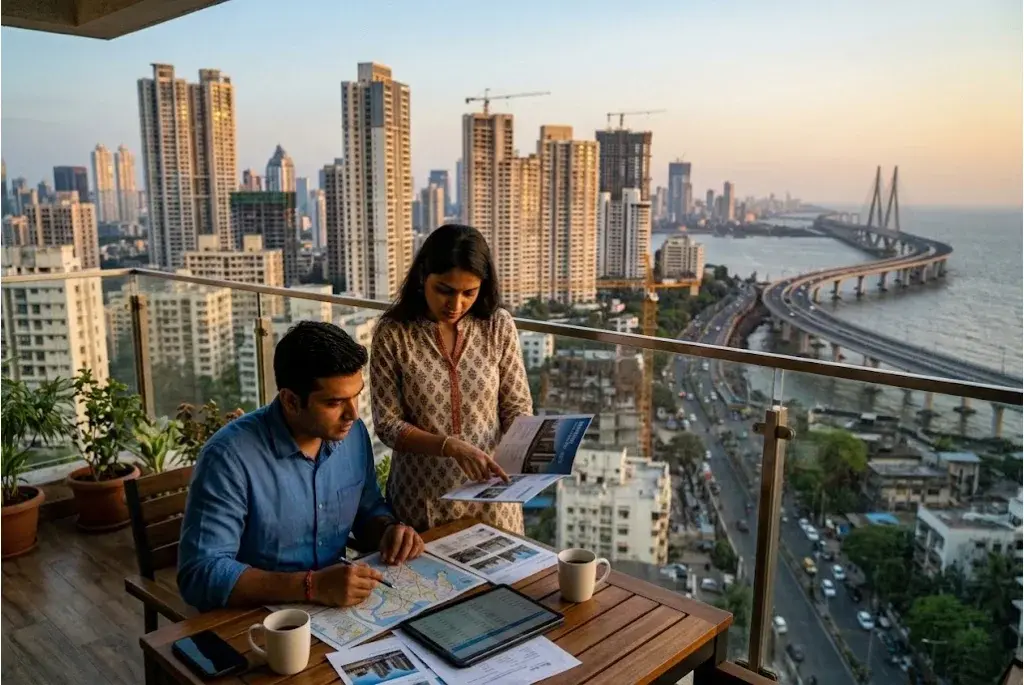
Mumbai real estate market 2026: Prices, trends & what buyers must know
Understand Mumbai real estate market trends, area-wise property prices, and expert buying guidance for 2026 to make confident and well-informed property decisions.
Buying property in Mumbai is a dream, but it has its own obstacles. Prices fluctuate across locations, new infrastructure is a sign of rising prices, and buyers struggle to determine true value. In 2026, the Mumbai real estate market will be in a more dependable and transparent phase, with buyers buying houses and selling them rather than speculating and understanding how prices fluctuate, identifying the most important developments, and making informed choices. This reduces risk and increases the probability of future outcomes.
This blog provides market information clearly to help buyers make confident decisions.
What is driving the Mumbai real estate market in 2026?
The Mumbai real estate market remains active through 2026, with demand primarily from end users. Families seek security and ownership, professionals prefer stability in rent, and futuristic lifestyles influence purchasing decisions. Compared to previous cycles, buyers today are focused on the long-term value of their purchases rather than on quick price increases.
The employment of people in finance, technology, logistics, and services continues to help support demand for housing. Suburban areas attract the majority of buyers because of lower prices and better connectivity. This has brought stability to the market and has reduced abrupt price fluctuations.
Key demand drivers include:
- High-end user participation
- Preference for near-completion or ready homes
- Better infrastructure in the suburbs
The structure helps make the market more stable and buyer-friendly.
Mumbai real estate trends buyers are experiencing in 2026
One of the most obvious Mumbai real estate trends to watch in the year 2026 is a desire for practical homes. Buyers don't care about flashy amenities; they focus on layouts that make their lives more comfortable. Efficiency of space and ventilation, storage, and privacy are more important than the extras that add style.
Homes that offer flexibility for working from home and comfort for families see more demand. Buyers are also looking for built-in amenities such as security, parking, and ample space to be included in the price rather than as expensive add-ons.
How redevelopment is reshaping Mumbai real estate trends
Redevelopment plays a crucial role in current Mumbai real estate trends. Older buildings in central and suburban areas are replaced with modern structures that meet safety norms and lifestyle expectations. This process adds supply without expanding the city outward.
Redeveloped projects usually offer better planning, lifts, parking, and compliance. Buyers prefer these developments because they combine established neighbourhoods with modern living standards.
Property rates in Mumbai in 2026: area-wise reality
Property rates in Mumbai vary considerably by zone, accessibility, and the quality of the project. In 2026, prices show steady growth rather than dramatic rises, allowing buyers to consider their options thoroughly.
A broad range of residential prices includes:
- South Mumbai: Rs45,000 to Rs75,000+ per sq ft
- Prime Western suburbs Cost: Rs35,000-R55,000 per square foot
- Western suburbs extended: Rs22,000 - RS32,000 per square foot
- Central suburbs and the surrounding regions: between Rs18,000 and Rs28,000 per square foot
These numbers show why suburbs are popular with buyers seeking quality and convenience.
Why property rates in Mumbai differ by micro-market
Property rates in Mumbai depend less on distance from the city centre and more on connectivity, social infrastructure, and redevelopment activity. Areas with metro access, wide roads, and nearby schools or hospitals command better pricing.
Buyers increasingly measure value through commute time, daily convenience, and long-term usability rather than prestige alone.
How metro connectivity shapes Mumbai property price trends
Infrastructure remains a major influence on Mumbai property price trends. Metro expansion reduces travel time and connects residential areas with business hubs. Locations near operational or upcoming metro lines attract stronger buyer interest.
Improved mobility increases demand consistency and protects property values even during slower market phases.
How road networks and connectivity influence Mumbai property price trends
Large-scale road projects improve access across the city and surrounding regions. These upgrades gradually increase residential demand rather than triggering sudden spikes. As accessibility improves, surrounding neighbourhoods experience sustained appreciation.
This pattern supports stable Mumbai property price trends rather than speculative growth.
How buyers can approach the Mumbai real estate market wisely
Entering the Mumbai real estate market in 2026 requires clarity and patience. Buyers benefit from evaluating multiple options and comparing ready homes with under-construction projects.
Key checks include:
- Legal approvals and documentation
- Developer reputation and delivery record
- Construction quality and layout efficiency
The market currently rewards informed buyers rather than rushed decisions.
Financial planning tips for buyers in 2026
Home loan rates remain relatively stable, supporting affordability. Buyers increasingly focus on comfortable EMI planning rather than stretching budgets. Factoring in registration costs, maintenance charges, and future expenses helps avoid financial pressure.
Sound financial planning improves long-term satisfaction with ownership.
Long-term value in the Mumbai real estate market
The Mumbai real estate market continues to reward long-term ownership. Land scarcity, population density, and infrastructure investment support steady appreciation over time. Short-term trading carries higher risk, while end-use buying provides stability.
Buyers who choose well-connected locations with strong social infrastructure experience better value retention.
Why central locations hold value across market cycles
Central neighbourhoods benefit from established transport networks, access to employment, and redevelopment potential. These factors protect value during slower phases and support appreciation during growth periods.
Projects such as Monopoli in Dadar by Nandivardhan Group reflect how central redevelopment meets modern living needs while retaining long-term value fundamentals.
Conclusion
The Mumbai real estate market in 2026 shows maturity, balance, and buyer-driven demand. Growth remains steady rather than speculative, supported by infrastructure, redevelopment, and lifestyle shifts. Mumbai real estate trends favour functionality, connectivity, and reliable developers.
With realistic property rates in Mumbai and infrastructure-led Mumbai property price trends, informed buyers can make confident decisions aligned with long-term value and everyday comfort.