
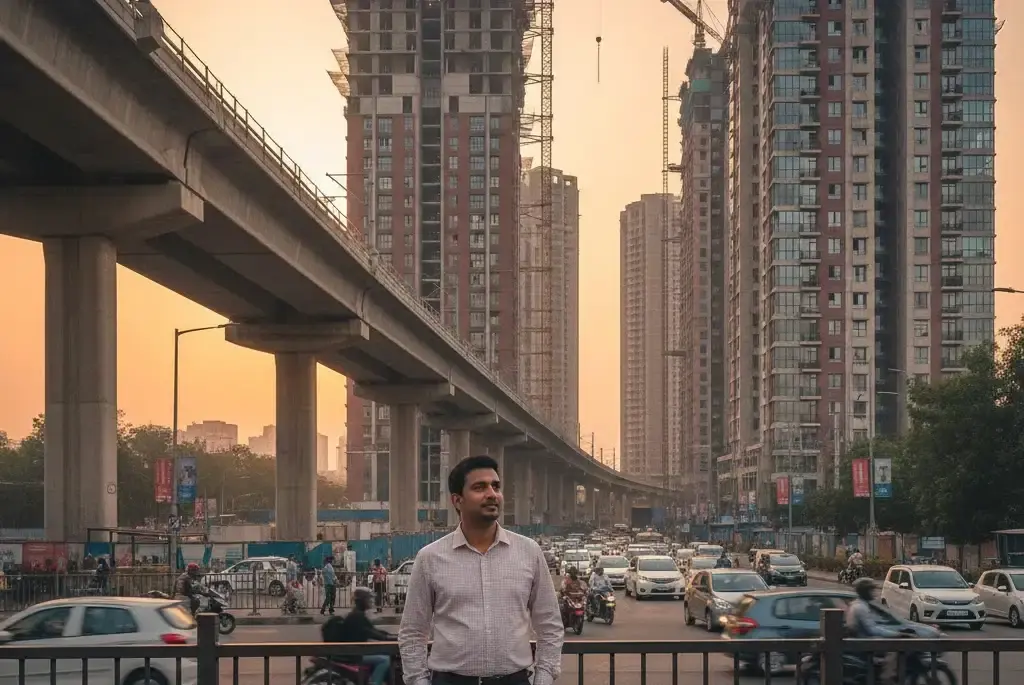
Luxury property prices rise with infrastructure projects
Discover how major infrastructure projects drive luxury property prices by improving connectivity, boosting demand, attracting investors, and accelerating long-term returns.
One infrastructure project can multiply luxury property prices. Here's how
A property that was considered distant and inconvenient suddenly transforms into a prime location. What changed? A metro line was announced. Within months, prices do not just grow, they multiply. This transformation happens repeatedly across cities, and understanding the impact of infrastructure projects on property prices reveals a powerful wealth-building opportunity that smart investors consistently capture.
When the announcement arrives
The government announces a metro project or expressway coming to your area. This single announcement triggers everything. News spreads through property networks fast. Investors who understand the infrastructure projects and real estate appreciation start buying immediately. Prices begin climbing because people suddenly visualize what the reduced commute means for their daily lives.
A property trading at one crore rupees before announcement becomes a hot commodity. Within months, the same property prices jumped five to ten percent. By year one, twenty percent gains are common. Early buyers at the announcement phase see this multiplication simply because they recognized the opportunity before everyone else caught on.
This is when the smart money moves. Early recognition equals early purchase equals larger multiplication. The role of infrastructure in increasing property prices becomes most visible during this announcement phase. Word spreads. Demand builds. Prices rise.
Construction phase brings real momentum
Construction begins and the project becomes absolutely real. People stop imagining and start calculating actual commute times. The impact of infrastructure projects on property prices accelerates dramatically now.
During construction years, something powerful happens beyond just transportation. Commercial activity clusters around the future transit hub. Offices start relocating to areas that will soon become highly accessible. Companies realize that employees will prefer to work and live near good transportation. Jobs move to the area. Families follow jobs. Residential demand explodes.
Properties appreciate faster during these construction years:
- First two to three years: ten to twenty percent appreciation yearly
- As completion nears: twenty to thirty percent appreciation
- Final year before opening: fastest appreciation yet
The infrastructure projects and real estate appreciation momentum becomes unstoppable. Travel time reduction shifts from theoretical to anticipated. Forty-five-minute commutes will become twenty minutes. That reality drives buyers to act. Each construction milestone increases property prices because people sense the opportunity arriving.
Opening day creates the surge
The infrastructure finally opens. Metro trains run. Expressways carry traffic. Travel times actually reduce to what people calculated. The anticipated benefit becomes a real benefit. Everyone realizes they made the right calculations.
Demand becomes fierce. New residents rush to live near the transit. Workers near the new infrastructure seek housing. Multiple competing offers appear for every available property. Media coverage highlights the "hidden gem" that was just unlocked. Outside investors who missed the early phases now recognize their mistake and pay premium prices to enter the market.
The role of infrastructure in increasing property prices shows its full power here. Properties multiply fifty to sixty percent from announcement to opening. Sellers realize they can demand premium prices. Buyers accept them because they see the long-term value. The rental market explodes simultaneously as young professionals seek well-connected properties.
The entire ecosystem transforms
Something even more remarkable happens after opening. The infrastructure does not just carry people. It attracts an entire ecosystem around itself.
Workers living nearby need schools for their children. Schools establish branches in the area. Families want hospitals. Clinics and hospitals open. New residents want entertainment and shopping. Restaurants and shops cluster nearby. Gyms, malls and entertainment venues appear naturally because demand exists.
A complete mini-city forms around the transit hub. Schools, hospitals, restaurants, shops, all concentrate in one place. This transformation multiplies property values beyond what anyone initially calculated. Properties no longer appreciate just because of commute reduction. They appreciate it because entire lifestyle infrastructure surrounds them.
Original investors who bought years earlier see their properties multiply in ways they never imagined. The ecosystem development adds value faster than anyone projected.
Why luxury properties multiply more
Regular properties appreciate moderately when infrastructure arrives. Luxury properties multiply dramatically. Understanding this difference matters for strategic investors.
Luxury property supply is limited. Only a handful of luxury projects exist in any area while regular properties are everywhere. When infrastructure arrives and demand explodes, that scarcity creates exponential value multiplication.
Ultra-wealthy buyers specifically seek properties in established luxury locations. Infrastructure transforms areas into established luxury destinations. Concentrated demand for limited supply equals concentrated price gains. Regular apartments appreciate thirty to fifty percent. Luxury apartments can appreciate fifty to one hundred percent due to scarcity factors.
Timing your entry for maximum gains
The impact of infrastructure projects on property prices follows predictable patterns if you understand timing:
- Announcement phase: five to ten percent gains, lowest risk
- Construction phase: ten to twenty percent annual gains, medium risk
- Opening phase: twenty to forty percent gains, higher prices
- Maturation phase: slower gains but stability
Smart investors buy during announcement or construction phases. Prices are still relatively reasonable. Multiplication still lies ahead. Waiting until opening day means paying premium prices for reduced future gains.
The infrastructure projects and real estate appreciation you capture depends heavily on timing. Buy before the announcement if you can identify projects early. Buy an announcement if you spot trends. Buy during construction if you want safer entry. Waiting until completion means the major multiplication has already happened.
Real stories prove this works
Mumbai metro expansion created millionaires. Properties near Dahisar went from one crore to over two crore rupees. Western suburbs jumped from eighty lakhs to one point five crore. Thane transformed from distant to premium, multiplying property values one hundred to one hundred fifty percent over five years.
The role of infrastructure in increasing property prices works consistently across cities. Bangalore expands with infrastructure projects. Hyderabad shows similar patterns. The mechanism repeats everywhere because the fundamentals remain constant. Good transportation creates desirable locations. Desirable locations command premium prices. Limited supply of quality properties multiplies values fastest.
Your action steps
The impact of infrastructure projects on property prices is not theoretical. It happens repeatedly. Track government infrastructure announcements in your city. Identify projects likely to succeed based on government funding and timeline. Research luxury projects near upcoming infrastructure developments that show genuine promise.
Early entry captures the multiplication. Infrastructure-driven appreciation works because connectivity fundamentally improves people's lives. This improvement translates into sustained demand and genuine value growth. Infrastructure projects and real estate appreciation remain connected through fundamental human need for good connectivity.
Start researching your city's infrastructure plans today. The advantage goes to informed investors who recognize opportunities before everyone else catches on.
FAQs
1. How do infrastructure projects affect property prices in India?
- Infrastructure projects like metro lines and expressways directly increase property prices by improving connectivity, reducing commute times, and attracting commercial activity. Properties near announced infrastructure typically appreciate 50 to 60 percent from announcement to completion, with luxury properties often doubling in value due to limited supply.
2. When is the best time to buy property near a metro project?
- The best time to buy is during the announcement or early construction phase, when prices are still relatively affordable and maximum appreciation lies ahead. Waiting until the metro opens means paying premium prices with significantly reduced future multiplication potential. Early entry always captures the biggest gains.
3. Why do luxury properties appreciate more than regular properties near new infrastructure?
- Luxury properties have extremely limited supply compared to regular apartments. When infrastructure drives massive demand into an area, that scarcity creates concentrated price surges. Regular apartments may appreciate 30 to 50 percent, while luxury apartments can multiply 50 to 100 percent due to fewer available units competing for wealthy buyers.
4. Which Indian cities show the best property appreciation due to infrastructure development?
- Mumbai, Bangalore, Hyderabad, Thane, and Pune consistently show strong infrastructure-driven appreciation. Mumbai metro expansion multiplied Dahisar properties from one crore to over two crore. Thane transformed from a distant suburb to a premium destination, delivering 100 to 150 percent appreciation over five years through sustained infrastructure investment.