
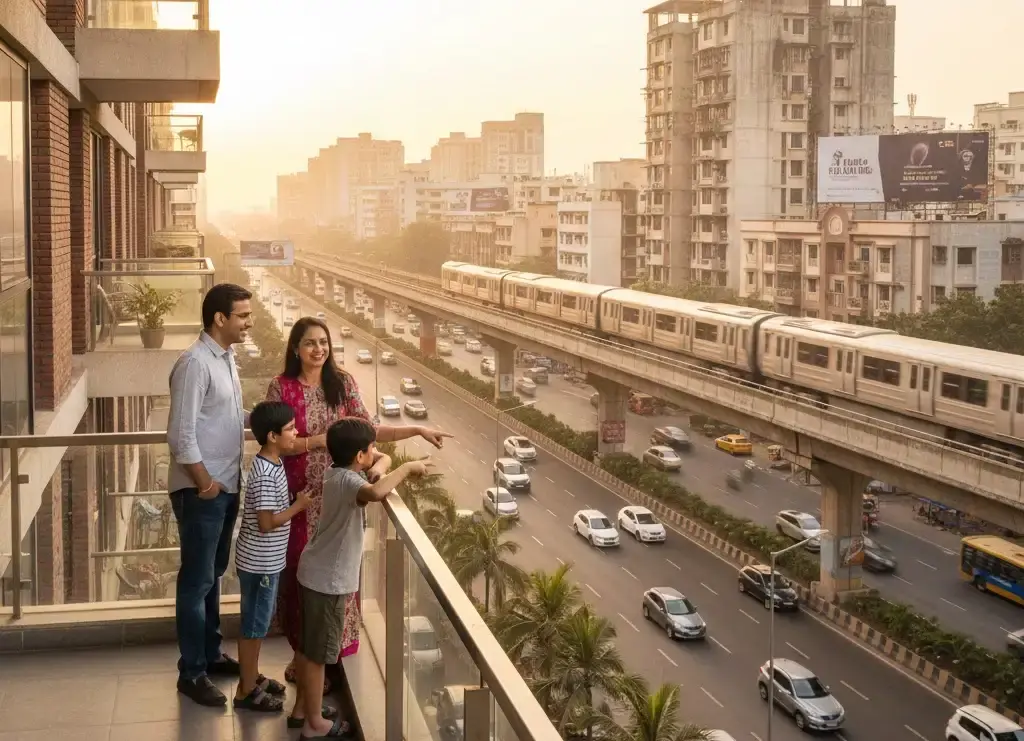
How Expressways and Metros Impact Property Value
Discover how expressways and metros impact property value by improving connectivity, boosting demand, increasing rental yields, and driving long-term real estate growth.
How expressways and metros change what your home is actually worth
Mumbai's real estate story has always been about one thing: where can you get to, and how quickly can you get there? This simple truth drives everything about property values in our city. When new metro lines open or expressways get built, something magical happens to the neighborhoods around them. Properties that seemed far away suddenly feel close. Prices that seemed stuck started climbing. And people start making serious decisions about where to live based on these changes.
Let me explain what's really happening when we see metro projects impact on real estate take shape across Mumbai. Understanding how metro projects impact on real estate becomes clearer when you look at the actual transformation happening in neighborhoods.
The basic truth about connectivity and value
Think about how you choose a place to live. Several factors matter most:
- How far is your job? How long will the commute take every morning?
- Where are the good schools for your children?
- Are there hospitals and quality healthcare nearby?
- Can you reach restaurants and grocery stores without hours in traffic?
These questions aren't just about convenience. They're about real money. They determine whether a property will gain value or lose it over time.
Infrastructure development and property value aren't separate things. They're connected at the root. When the Western Express Highway gets wider, apartments along that route become more desirable. When a new metro line reaches Thane, suddenly people who work in Lower Parel can actually live there comfortably. The role of infrastructure in real estate growth is this direct. Better roads and rails mean better living, which means people want those places more, which means prices go up.
What does infrastructure actually mean in practical terms?
- Metro trains running under the city
- Expressways that let you drive across town
- Widened roads that reduce traffic jams
- Bridges connecting neighborhoods that felt isolated before
- New transport corridors opening access
It's not glamorous, but it's everything. Understanding the role of infrastructure in real estate growth helps you see why certain areas command higher prices than others.
The numbers that matter
Here's what we've actually seen happen in Mumbai: Properties that sit one or two kilometers from a metro station have gone up in price by ten to fifteen percent. That's real money. That's the difference between a good investment and a great one. That's the difference between your money sitting still and your money growing.
Why? Because when the metro shows up, several positive changes happen:
- Travel time drops dramatically (forty-minute drive becomes twenty-minute train ride)
- You arrive home not exhausted but energized
- You're not stressed from traffic battles
- You have real energy for your family and work
- You can afford larger apartments in further neighborhoods
- The commute no longer kills you financially and mentally
This is exactly how infrastructure development and property value move together in real time.
Think about a young couple in Mumbai right now. They want space. They want affordability. But they also work in downtown Mumbai. Five years ago, this was an impossible situation:
- Option 1: Pay huge money for tiny place near office
- Option 2: Take brutal two-hour commute daily
- No real middle ground existed
Today, with the metro expanding into areas like Dadar and Lower Parel, they have real options. They can get a decent apartment at a reasonable price and still be at work in half an hour. This changes everything. Suddenly, those neighborhoods explode in demand. Prices move up. Investors pay attention. The impact of metro projects impact on real estate is visible in these shifting market dynamics.
More than just money
Urban infrastructure and property appreciation sounds like an economic fact. But it's actually about how people live their lives. When you cut your commute in half, you get back time. Real, usable time:
- You're home for dinner with your kids instead of sitting in traffic
- You're not arriving at work already frustrated and tired
- Your weekends feel longer because you're not spending Saturday afternoon dealing with traffic stress
- You have energy for hobbies, family, and personal interests
- Your mental health improves with reduced stress
- Your relationships strengthen with more quality time
This matters for real estate because people sense this in their bones. They know that living in a well-connected area means living a better life. So they search harder for those places. They pay more for them. And once they find them, they stay. Urban infrastructure and property appreciation works because it directly improves how people experience their daily existence.
Around every metro station, something else happens naturally. The ecosystem develops organically:
- Coffee shops open because people have time to stop
- Schools expand because families want to live nearby
- Hospitals set up offices and clinics
- Restaurants appear offering varied cuisines
- Markets grow with shopping options
- Small shops turn into commercial zones
- Gyms and fitness centers establish themselves
- Entertainment venues emerge
None of this requires someone planning it out. It just happens because people are there, they have time, and they want these services. Infrastructure doesn't just change travel times. It creates entire neighborhoods with complete ecosystems.
The transformation of Mumbai's western suburbs - from Andheri to Borivali, from Malad to Santacruz - demonstrates this principle perfectly. Five years ago, these areas were considered distant and inconvenient. Today, thanks to expanding metro lines and expressway developments, they've become vibrant neighborhoods with strong investment potential.
Key takeaways
Remember these important points:
- Connectivity determines property value more than anything else
- Metro projects create immediate transformation
- Travel time reduction directly increases property desirability
- Ecosystem development multiplies property value
- Young professionals prefer well-connected areas
- Schools and hospitals follow good infrastructure
- Investments made early capture maximum gains
- This pattern repeats across all major cities
The future of Mumbai's real estate is written by infrastructure. Where the metros go, where the expressways expand, where the roads get better - that's where opportunity lives. The role of infrastructure in real estate growth isn't changing. It's everything.
FAQs
1. How do Metro projects specifically impact real estate prices in Mumbai?
- Proximity is key. Properties located within one to two kilometers of a metro station typically see a price increase of 10% to 15%. This is driven by the drastic reduction in commute times and the increased desirability of the neighborhood.
2. Why do expressways and widened roads increase a home's value?
- Improved road infrastructure like the Western Express Highway makes once-"distant" neighborhoods feel closer to commercial hubs. When travel time decreases, demand for housing in those areas rises, directly pushing property values up.
3. What kind of social infrastructure follows the development of Metros and Expressways?
- Infrastructure projects create an organic ecosystem. Once a transport hub is established, coffee shops, schools, hospitals, restaurants, and gyms naturally open nearby to serve the growing population, further increasing property value.
4. Is connectivity the most important factor in determining property value?
- Yes. According to the blog, "connectivity determines property value more than anything else." It dictates where people choose to live, work, and send their children to school.